Marine
·
10 min read
Boat winterization checklist and work order

Boat winterization starts as one long list in the service manager's head and ends as five WhatsApp messages, two lost photos and an owner asking in March whether the water was drained. This post gives a winterization checklist by system and a sample haul-out work order, which a marina, shipyard or charter service team adapts to its own fleet. At the end it shows how the same list runs in Serwizz, so every job has its own work order, an owner and photos.
Autumn and spring are the busiest periods for hauling boats, and every marina and yard knows it from experience. For the yard, it means a whole fleet goes through in a few weeks, not a single boat.
Why boat winterization fails on details
Winterization does not fail on the big items. Everyone knows the boat comes out, the hull gets washed and the engine gets protected. Problems start with the small items nobody wrote down: who drained the water heater, whether antifreeze reached the cooling circuit, whether the batteries are disconnected and in what condition.
What happens when the list lives in someone's head
When winterization runs by word of mouth, each technician remembers their own part and the service manager remembers everything else. With ten boats in the marina this still works. With fifty boats and a few weeks to haul them, one skipped step goes unnoticed until spring, and the owner finds it first.
The cooling system is the typical example. Descaling the external cooling circuit and adding antifreeze keep residual water from bursting the lines, and both steps depend on someone doing the work and recording it, not on assuming it was done.
Documentation protects the yard and the owner
Many marinas abroad ask for a completed haul order before the boat arrives, and yards keep an approved work plan the owner signs. The principle holds on the Adriatic too: when the scope is written down before the haul-out, nobody argues about what was agreed.
Anonymous findings from Serwizz customer interviews point to the same place. Service companies moving off paper, WhatsApp photos and Excel value most having tasks and documentation in one place and seeing in real time what is in progress.
Hauling a fleet is a scheduling problem, not only a labor problem
The travel lift and the space ashore are limited, so boats come out one after another by appointment, while the service team has to know which items are done on which boat. When the order and the progress live in separate spreadsheets and messages, the service manager loses the overview in exactly the weeks when it matters most. Every gap then surfaces only when the boat is needed in the water again.
How to winterize a boat step by step
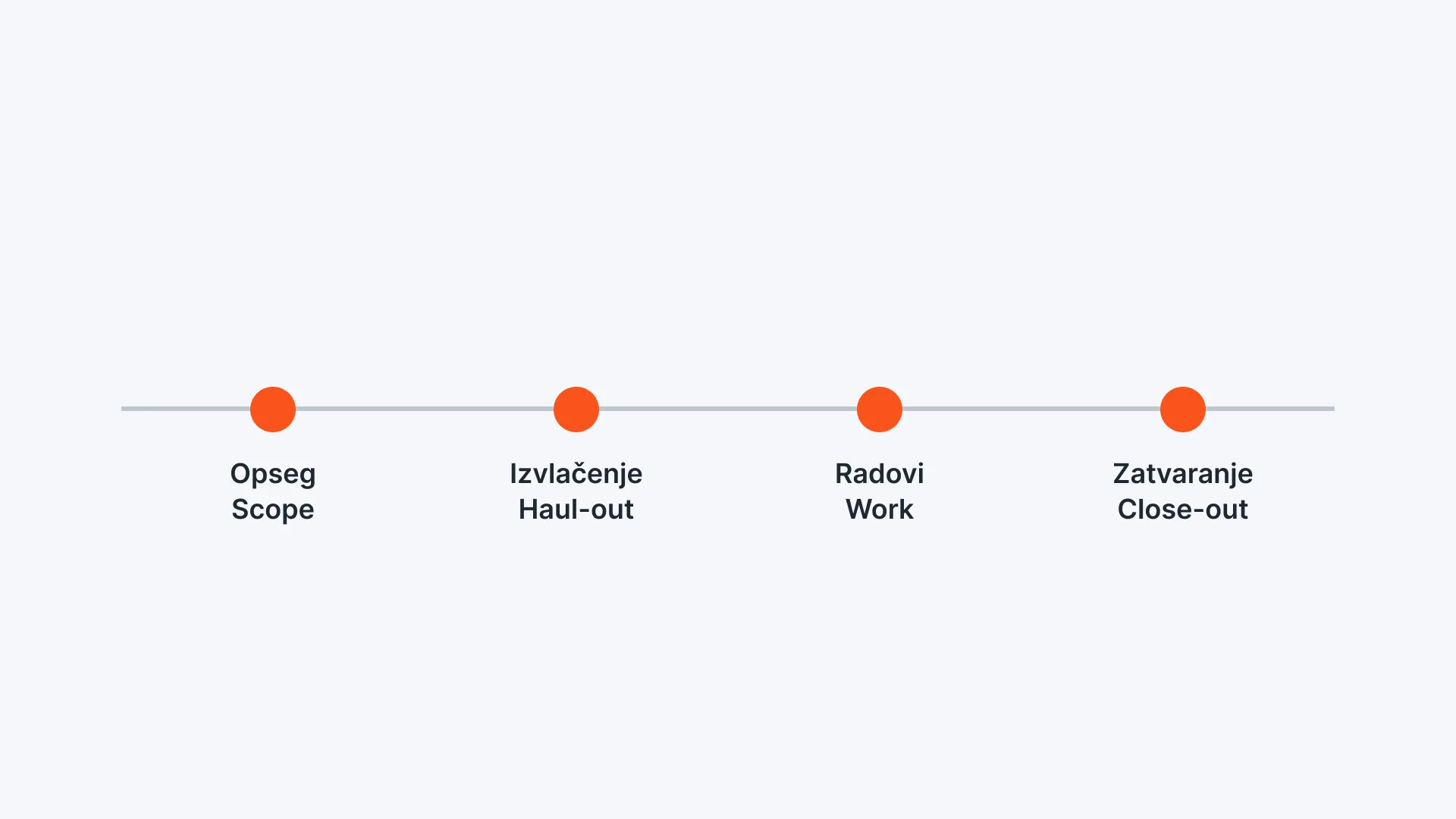
The most practical method is one work order per boat with a checklist split by system. The order follows the real sequence: preparation before the haul-out, the haul-out, work ashore and close-out.
Step 1: agree the scope before the haul-out
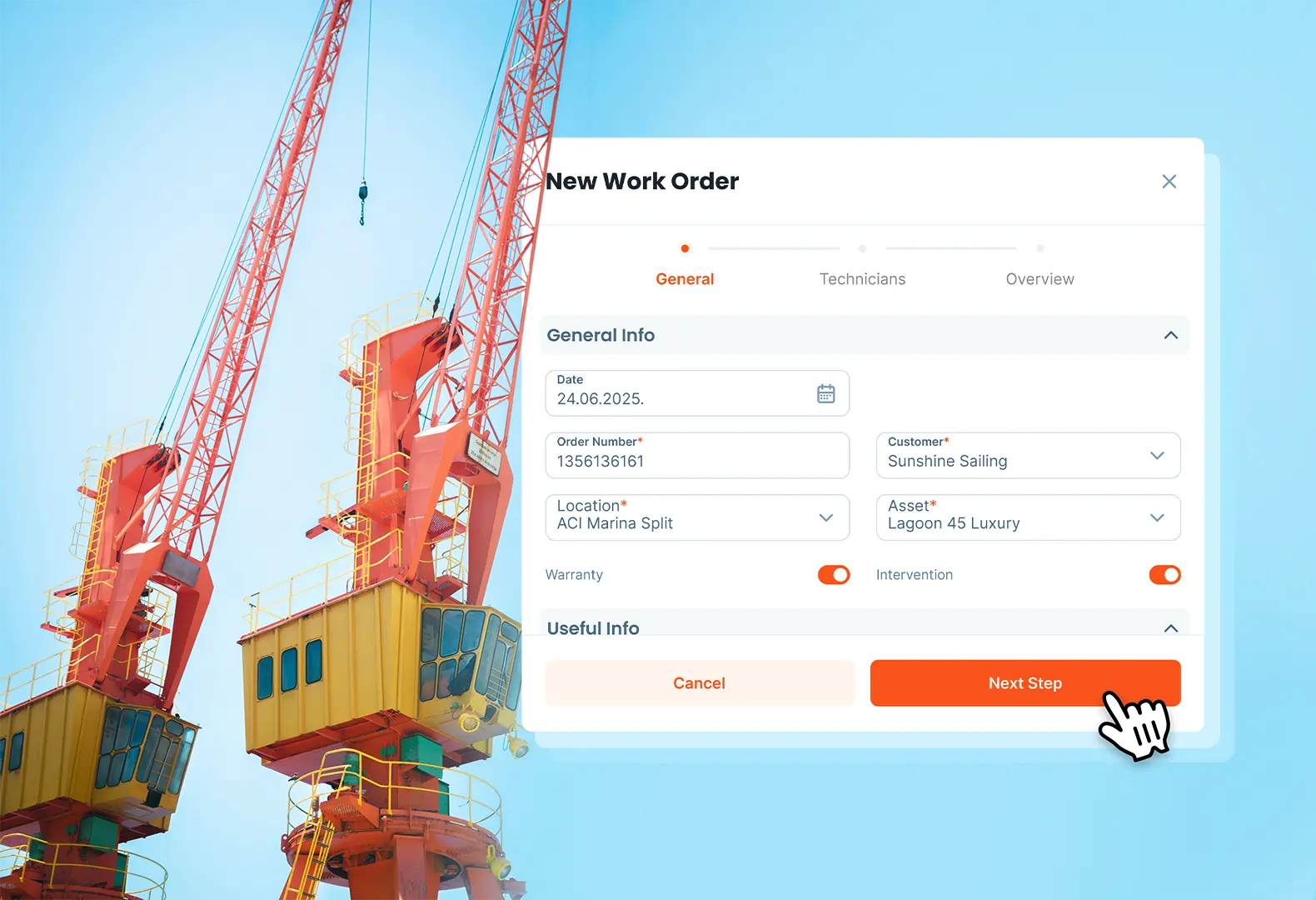
Before the boat is lifted, write down what the owner asks for and what the yard does by default. The work order needs the boat, the haul-out date, the spot ashore, an owner, the list of agreed jobs and a note on jobs done only with approval. Extra work found ashore enters as a new work request, not as a verbal agreement.
Step 2: preparation before the haul-out
Before the haul-out, a short warm test run of the engine, a check of the shaft seal and lightening the boat by draining excess water and waste all pay off. These tasks happen while the boat is still afloat and they decide what to look for ashore.
Step 3: haul-out and hull inspection
As soon as the boat is ashore, the hull gets a pressure wash, then the team looks for blisters on the bottom and marks damp spots once the hull dries. This is where most extra work appears, so every finding gets a photo and attaches to the boat's work order.
Step 4: work by system
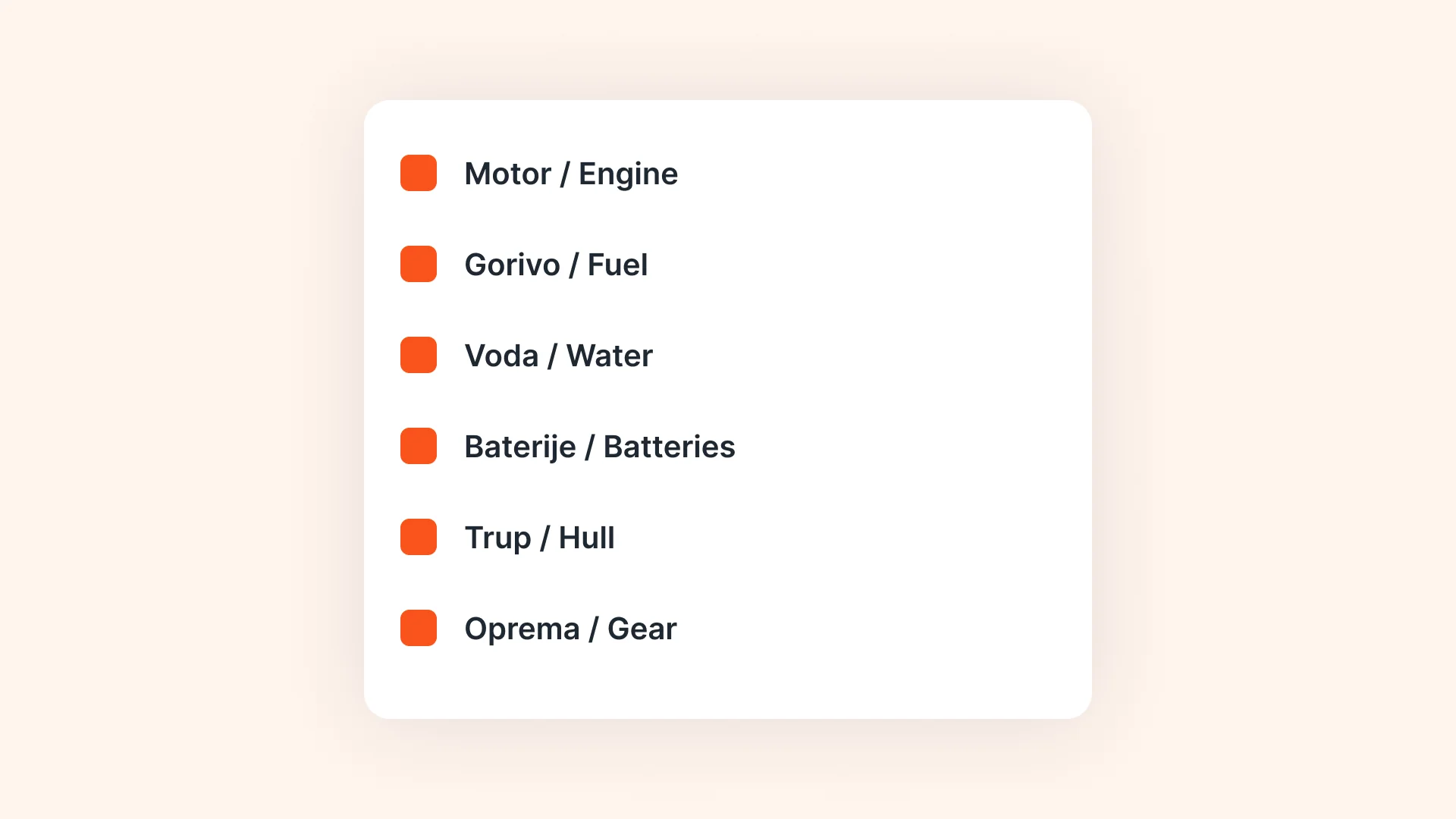
After the hull inspection comes the list by system. The table below is a starting point for each yard to adapt, because the list for a sailboat with a diesel engine differs from the list for a powerboat with an outboard.
| System | What is checked or done | What is recorded |
|---|---|---|
| Engine and cooling circuit | descaling the external circuit, antifreeze, draining residual water | product and amount, date, technician |
| Fuel | condition of tanks and lines, tank cleaning if needed | condition note, photo |
| Fresh water and sanitation | draining the water heater, pipes and pumps completely | confirmation that the system is empty |
| Electrical and batteries | disconnecting, checking and charging batteries | voltage, storage location |
| Hull, bottom and anodes | washing, hull inspection, coating condition, corrosion and anodes | photos of findings, list of replaced parts |
| Equipment and sails | checking lines, removing and servicing sails, dinghy and instruments | storage location of equipment |
The equipment checks follow the real sequence ashore: lines, washing, sails, dinghy, instruments. Hull, corrosion and anode items come right after the wash, while the hull is clean and visible.
Step 5: sample haul-out work order
A work order kept in a system or on paper looks like this:
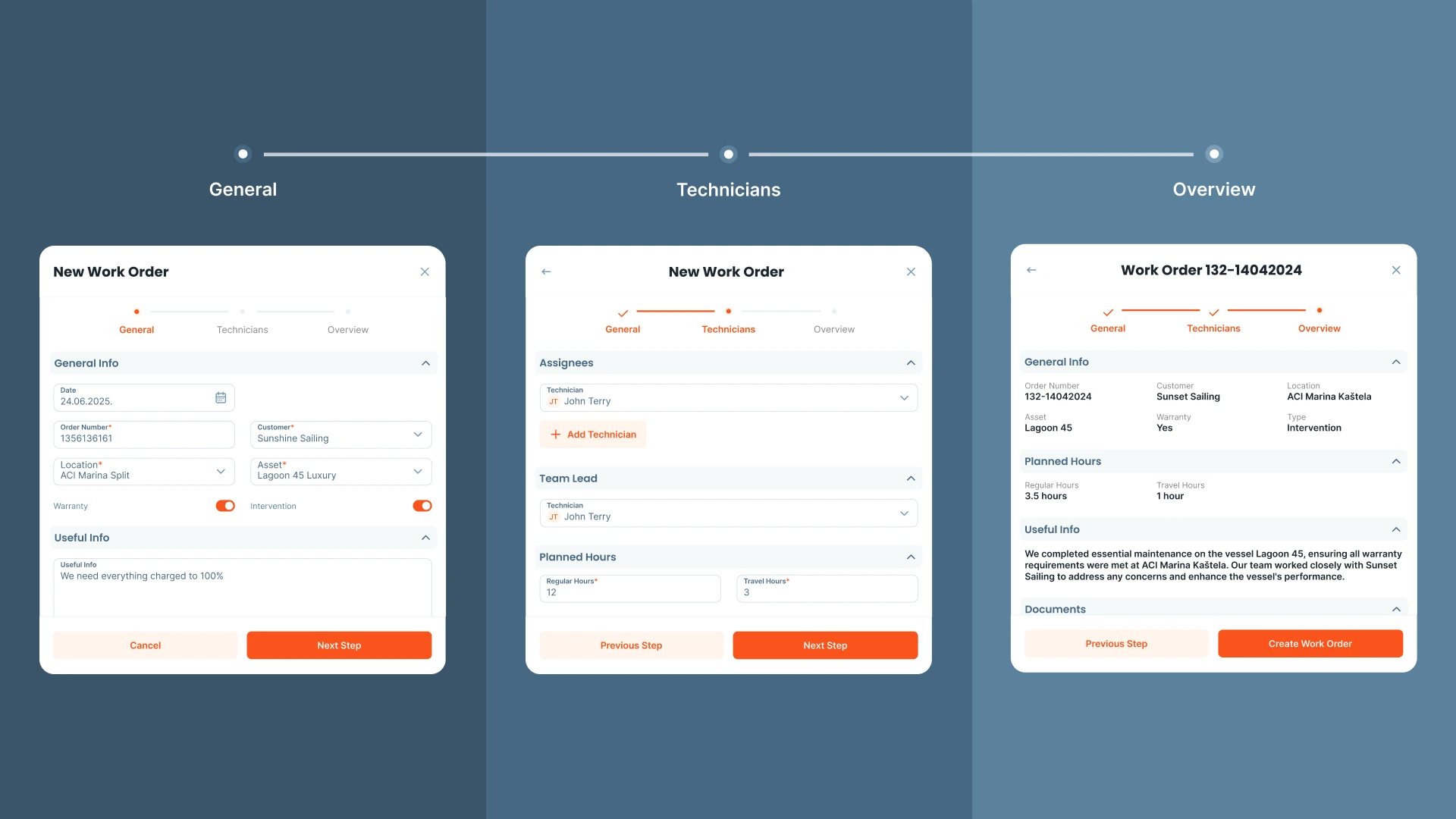
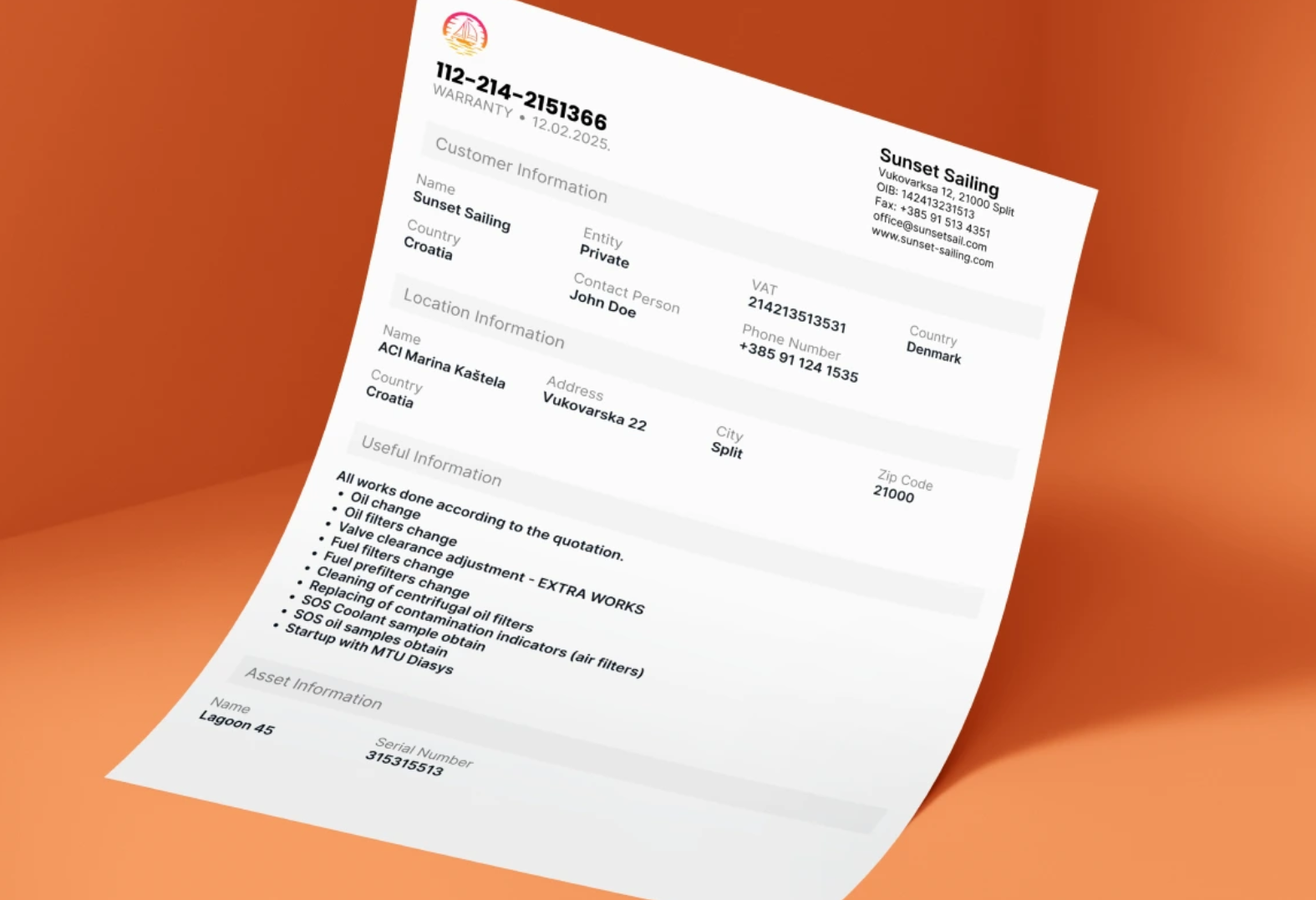
Work order: Haul-out and winterization, 12 m sailboat, diesel engine Haul-out slot: agreed date, travel lift 1 Owner: service manager, assignees by system Default scope: hull wash, hull inspection, cooling circuit protection, water drained, batteries disconnected, equipment list Extra, with owner approval: bottom coating, anode replacement, sail service Close-out: every system marked done, photos of findings attached, owner notified
The same template works for every boat in the fleet, with the system list adjusted. A blank form is available in the free work order template, and the recurring checks are in the free preventive maintenance checklist.
Step 6: close-out and feedback to the owner
The work order closes only when every system on the list is marked and the photos are attached. The owner then gets one message with a summary of the work done, and the yard has a record if anyone asks in spring what was done.
How it works in Serwizz
Serwizz is a CMMS that opens in the browser as a PWA, with no app store download, so the technician ashore works in the same work order as the manager in the office. Every step above has a place in the system.
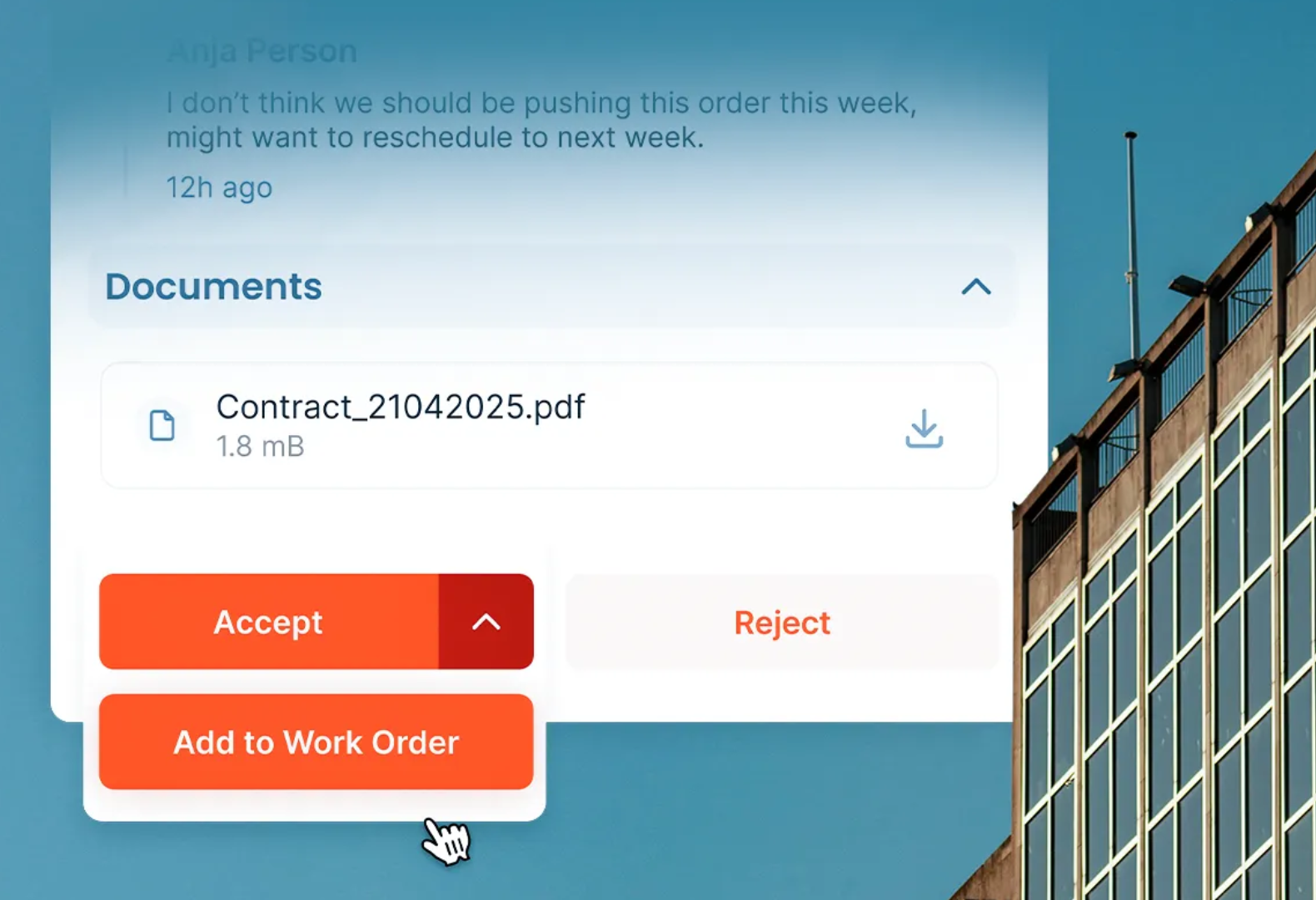
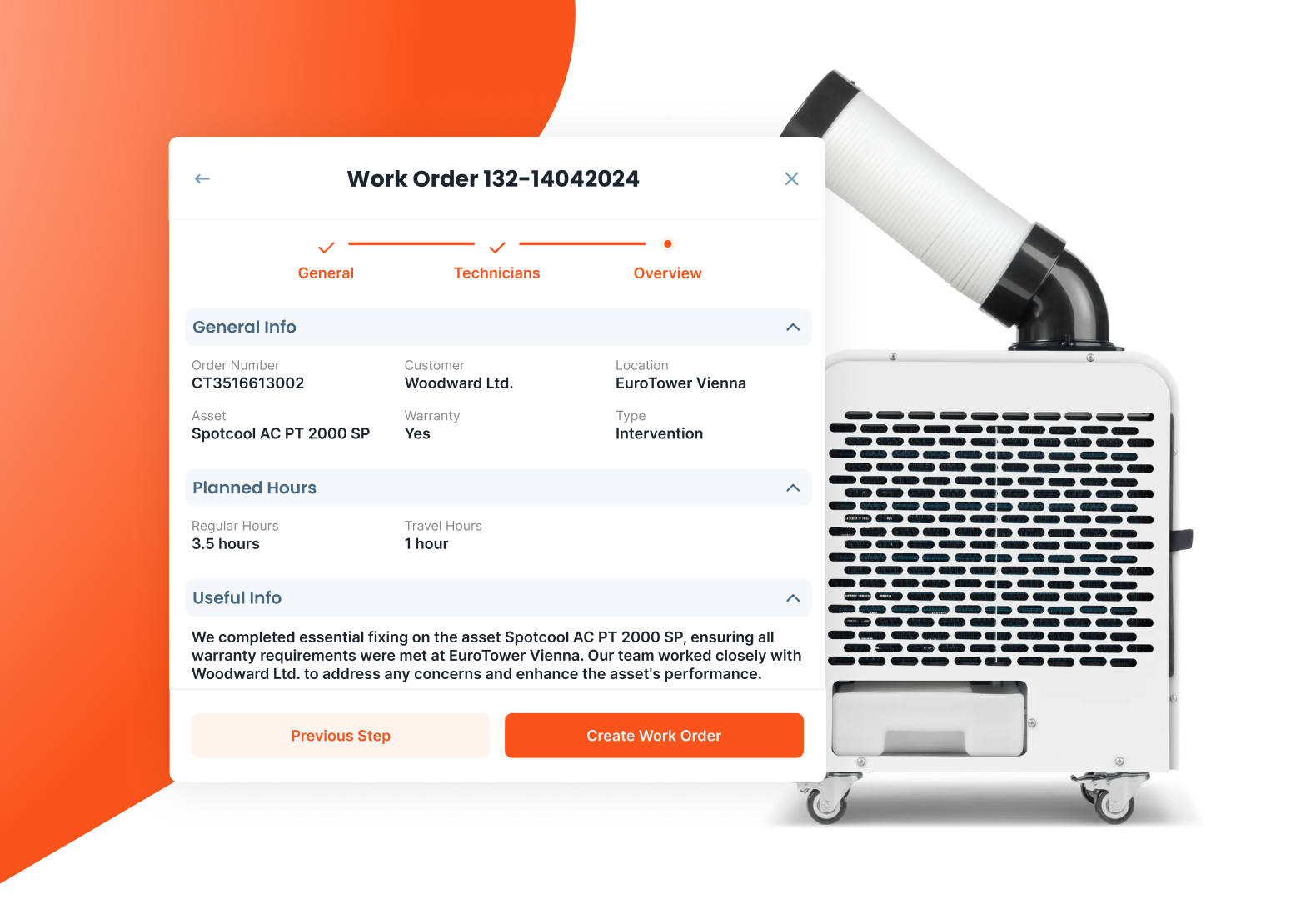
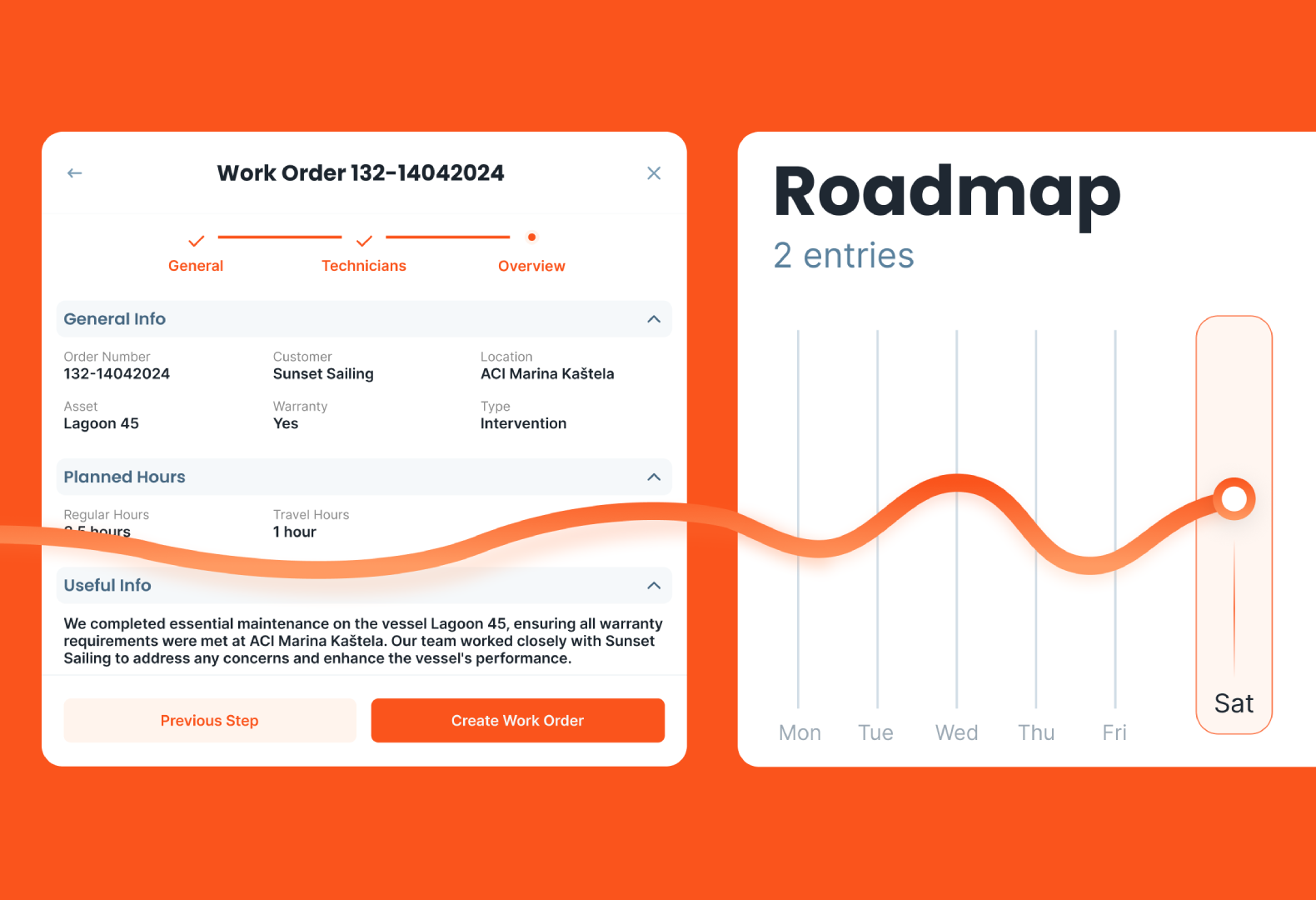
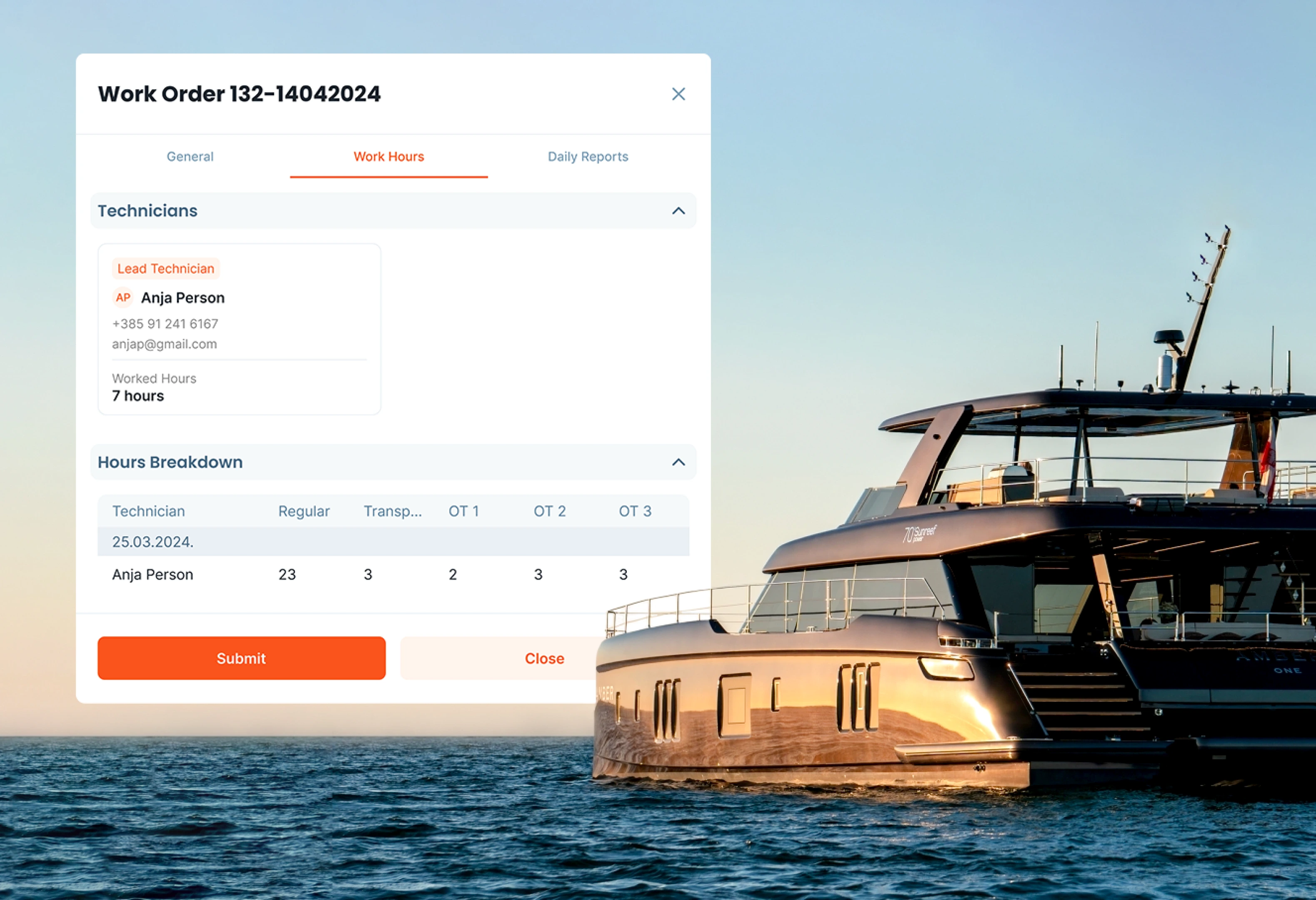
Work order management gives each boat one work order, with an owner, a due date and the statuses the order moves through. Extra work a technician finds ashore enters as a work request and waits for approval instead of being agreed on the way.
The system list from the table is stored as a maintenance checklist, built once for the fleet and attached to every winterization work order. Photos of findings attach directly to the order, which replaces sending pictures in messages.
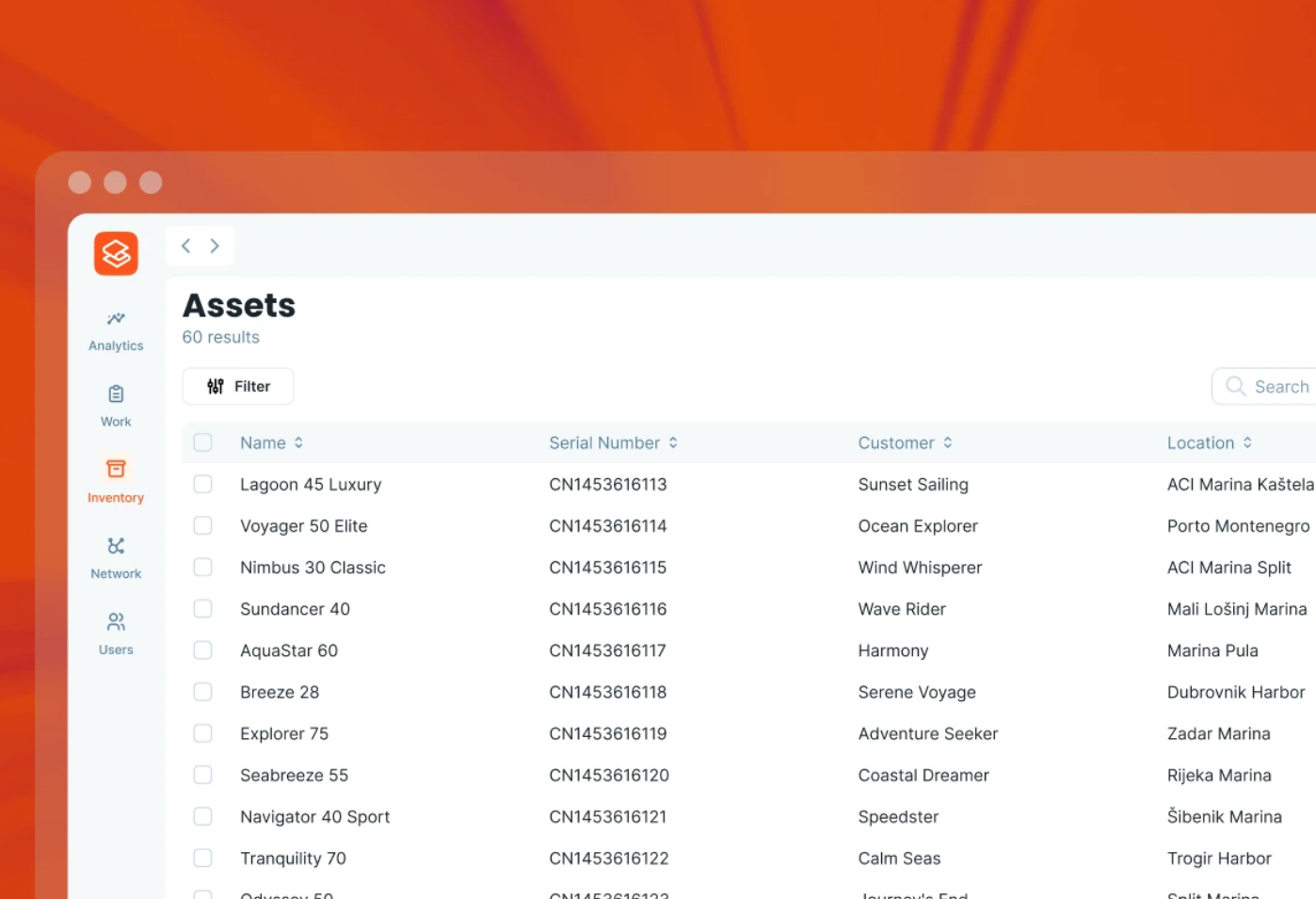
Roles follow the real work: the service manager creates orders and assigns people, the technician ashore marks finished items and attaches photos, and the approver confirms extra work before it starts. Boats and equipment are tracked as assets, so each boat's history stays in one place. Preventive maintenance schedules next year's winterization and spring commissioning in advance. Serwizz does not replace a technician's expertise or the choice of protection products, it keeps the list written, assigned and proven. More on marine use is on the Serwizz for marine page, and our post on yacht refit management covers planning of larger jobs.
A winterization list is done when nobody has to remember it
When every step is written down, assigned and confirmed by a photo, winterizing a fleet stops depending on one person's memory. Take the list from this post, turn it into a work order for one boat and see what is missing before the next haul-out.
Request your Serwizz CMMS demo and show us your winterization list, or try it yourself with the free trial.