HVAC
·
16 min read
F-gas leak checks: the work order

F-gas leak checks on air conditioners and heat pumps are a legal duty, and in most service companies they still live in a diary, an Excel sheet and the memory of whichever technician visited the site last. Regulation (EU) 2024/573 on fluorinated greenhouse gases sets how often equipment gets checked, what goes into the records and how long those records are kept, and the duty applies to every unit above the threshold, no matter how many customers the service company has.
For a service manager with 15 technicians and a few hundred units under contract, the question comes down to which unit, when and who. This post answers it in a form you put to work today: the calculation of tonnes of CO2 equivalent from the charge in kilograms, the interval table from the regulation, an example leak check work order with an Excel template to download, and the list of record fields the law asks for. The last part shows how the same routine runs in Serwizz as preventive maintenance per unit.
The timing matters because the equipment in your fleet is changing. From 1 January 2027, Annex IV of the regulation bans placing on the market monoblock air conditioners and heat pumps up to 50 kW with gases whose global warming potential is 150 or more, and manufacturers spent this autumn launching new propane heat pumps. Service companies will look after a mixed fleet for years: R32 and R410A units with leak check duties, and new R290 units without them under the same regulation.
Why do leak checks slip in a service company?
Leak checks slip because the duty belongs to the unit, while a service company plans its work by customer and by call. A technician arrives for a routine service, cleans the filters, measures the pressures and leaves, and nobody knows whether the unit was due for a leak check six or twelve months ago, or whether the report from the last check ever reached the customer.
The duty depends on tonnes of CO2 equivalent, not kilograms
Article 5 of Regulation (EU) 2024/573 requires leak checks on equipment holding 5 tonnes of CO2 equivalent or more of the fluorinated gases listed in Annex I. The threshold is the charge in kilograms multiplied by the global warming potential (GWP) of the gas, so two units with the same amount of refrigerant carry different duties, and an R410A unit crosses the threshold with less than a third of the charge an R32 unit needs.
The nameplate gives the gas type and the factory charge, not the real charge after installation. On VRF systems and split systems with long pipe runs, the installer tops up gas on site, so the exact figure exists only in the installation report. When the report is not stored with the unit, the next technician calculates the threshold blind.
Leak detection changes the interval
The same Article 5 sets three levels. Equipment under 50 tonnes of CO2 equivalent gets checked at least every 12 months, equipment from 50 to 500 tonnes every 6 months, and equipment of 500 tonnes or more every 3 months. With a leak detection system installed, the intervals double to 24, 12 and 6 months. Hermetically sealed equipment, labelled as such, with less than 10 tonnes of CO2 equivalent is exempt.
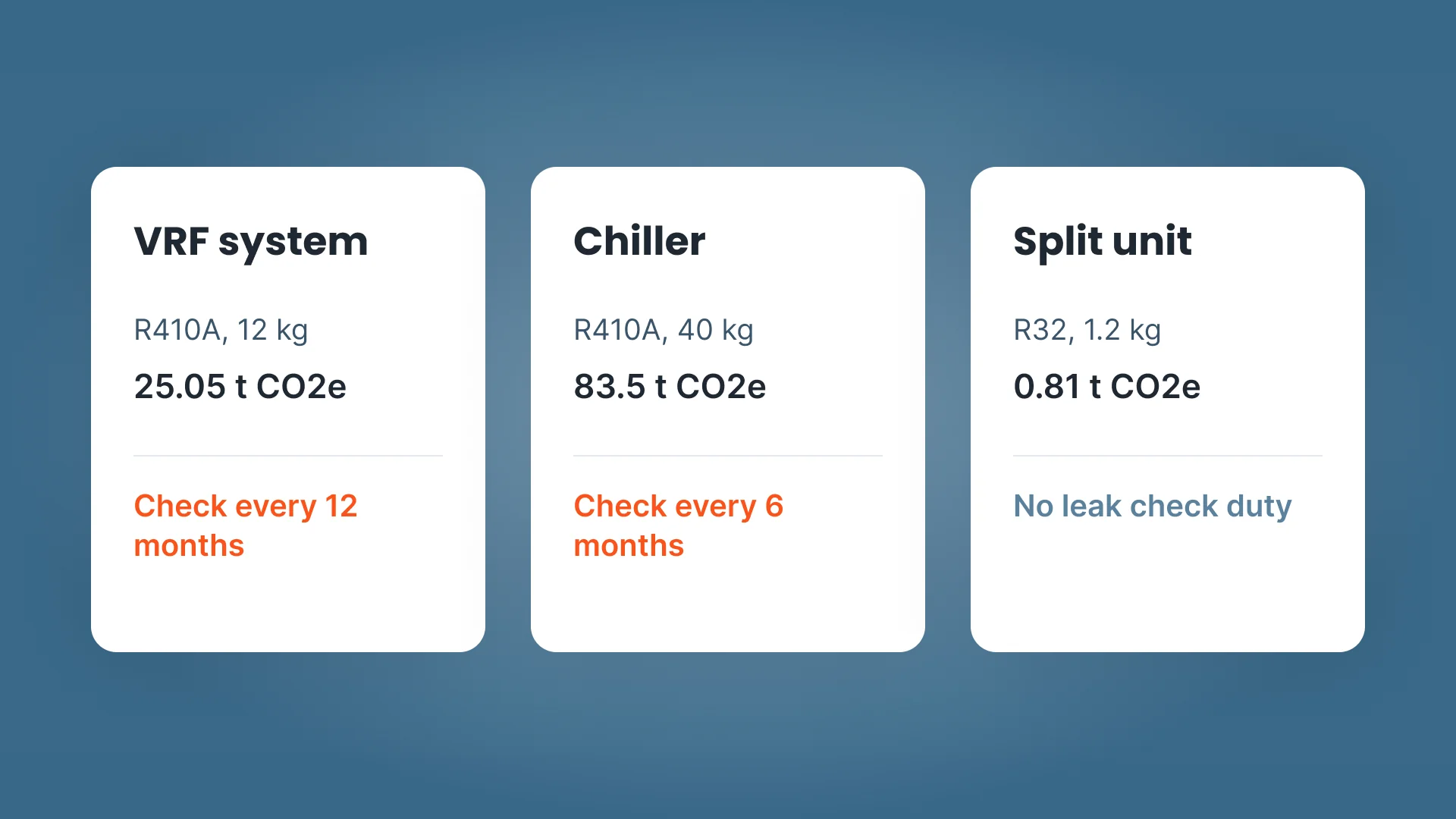
In practice one customer, an office building with two VRF systems and a dozen split units, already means three different rules. Split units with one kilogram of R32 sit below the threshold, a VRF with 12 kilograms of R410A needs a check once a year, and a chiller with 40 kilograms of the same gas twice a year.
A repair starts a new deadline
Article 4 of the regulation requires a detected leak to be repaired without undue delay. After the repair, a certified technician checks the unit again, no earlier than after 24 hours of operation and no later than one month after the repair. This second visit is the one most often lost, because nobody schedules it when the repair work order gets closed.
Records are kept for five years, by the customer and by you
Article 7 sets the records for each unit: the quantity and type of gas, the quantities added and recovered, the company and the technician with the certificate number, and the dates and results of every check. The operator, meaning the owner or user of the unit, keeps the records for at least five years, and the service company keeps copies for the same period. When an inspector asks for them, a service company with paper folders per customer spends days searching.
Serwizz customers we spoke with described the same pattern before moving to digital work orders: photos on WhatsApp, records in Excel and printed inspection reports. The benefit they named first was having the documentation in one place, with audit preparation no longer taking days.
Technician certificates have a deadline
The Croatian rulebook on training for people who carry out leak checks and service equipment containing fluorinated greenhouse gases was published in Narodne novine 37/2026 in April this year. Under the rulebook and Article 10 of the regulation, technicians who already hold a certificate complete a supplementary training programme for the first time no later than 12 March 2029, and a refresher programme once every seven years after it. The technician's certificate number goes into the records, so you need to know whose certificate stands on which work order.
How to calculate the interval and build the work order
The routine has five steps and works the same for one unit or three hundred. You do the first two steps once per unit and the rest every time a check falls due.
Step 1: calculate tonnes of CO2 equivalent
The formula from Article 3 of the regulation is the charge in kilograms multiplied by the GWP of the gas and divided by 1,000. GWP values for single gases are in Annex I, and for blends you calculate them under Annex VI as a weighted average of the components.
| Gas | GWP under the regulation | 5 t CO2e threshold | 50 t CO2e threshold | 500 t CO2e threshold |
|---|---|---|---|---|
| R32 | 675 | 7.41 kg | 74.07 kg | 740.7 kg |
| R134a | 1,430 | 3.50 kg | 34.97 kg | 349.7 kg |
| R410A | 2,087.5 (calculated under Annex VI) | 2.40 kg | 23.95 kg | 239.5 kg |
| R404A | 3,921.6 (calculated under Annex VI) | 1.27 kg | 12.75 kg | 127.5 kg |
R410A is an equal blend of R32 and R125, so its GWP is half of 675 plus half of 3,500, or 2,087.5. R404A has a GWP above 2,500, so from 1 January 2025 Article 13 bans servicing refrigeration equipment with new gas of this kind and allows only reclaimed or recycled gas until 2030. A unit like this gets a note on its asset card: gas or equipment replacement ahead. Propane, R290, is not on the Annex I list of fluorinated gases, so the leak check duty of Article 5 does not apply to R290 units. Work on them still needs a certified technician, because Article 10 also covers natural refrigerants.
Step 2: set the interval per unit
The calculation gives you the interval, along with two questions: is the unit hermetically sealed and labelled, and does it have a leak detection system?
| Charge | Without leak detection | With leak detection |
|---|---|---|
| Under 5 t CO2e | no duty | no duty |
| 5 to 50 t CO2e | every 12 months | every 24 months |
| 50 to 500 t CO2e | every 6 months | every 12 months |
| 500 t CO2e or more | every 3 months | every 6 months |
Take the office building from earlier. The VRF with 12 kilograms of R410A holds 12 × 2,087.5 / 1,000 = 25.05 tonnes of CO2 equivalent and gets checked every 12 months. The chiller with 40 kilograms of R410A holds 83.5 tonnes and gets checked every 6 months. A split unit with 1.2 kilograms of R32 holds 0.81 tonnes and stays on routine service with no leak check duty.
Step 3: fill in the asset card
The asset card holds the data which stays the same from check to check: manufacturer, model, serial number, location, gas type, real charge in kilograms, calculated tonnes of CO2 equivalent, whether a leak detection system is installed and the date of the last check. When the charge changes after a repair, you run the calculation again.
Step 4: use the same work order for every check
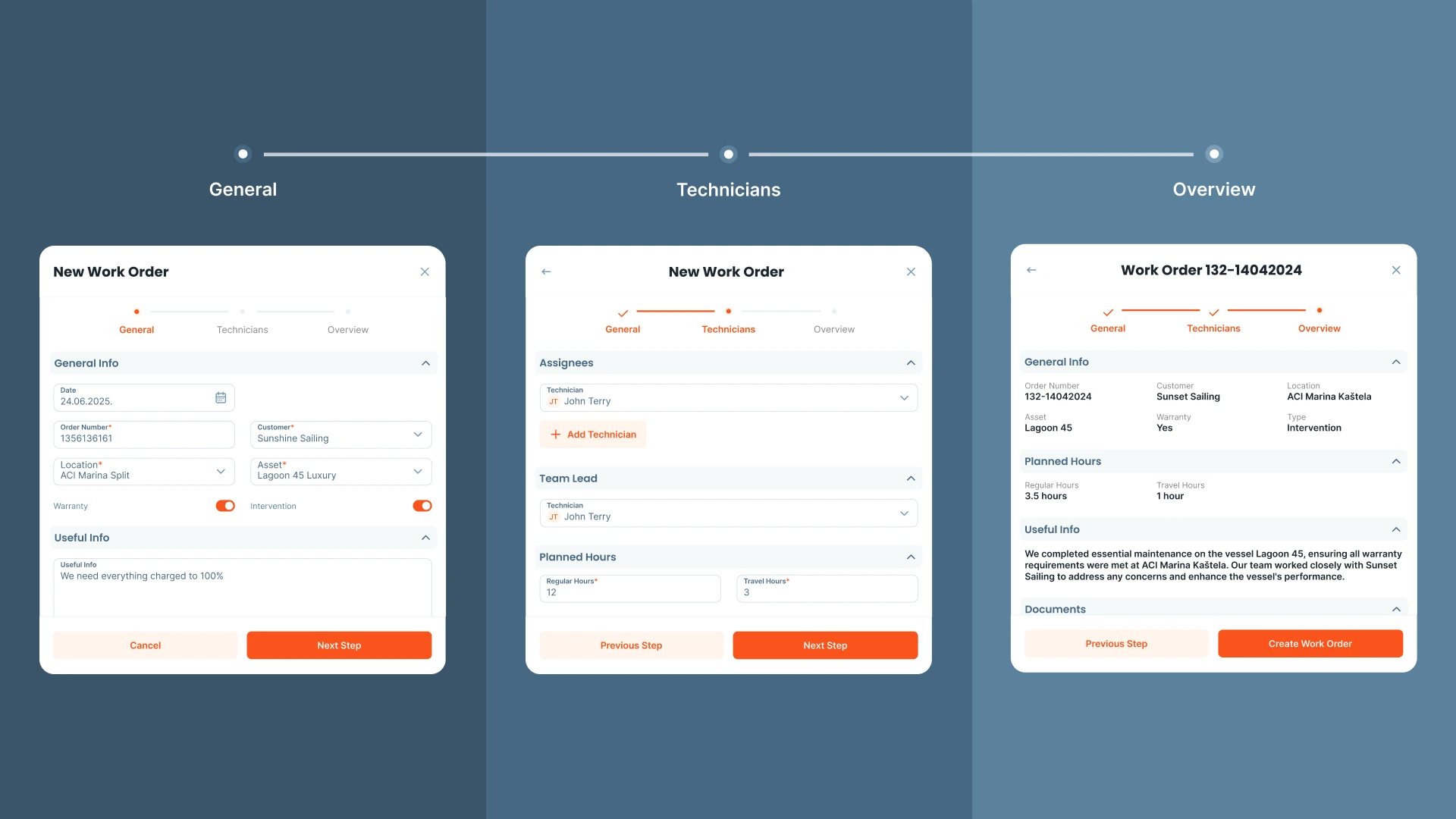
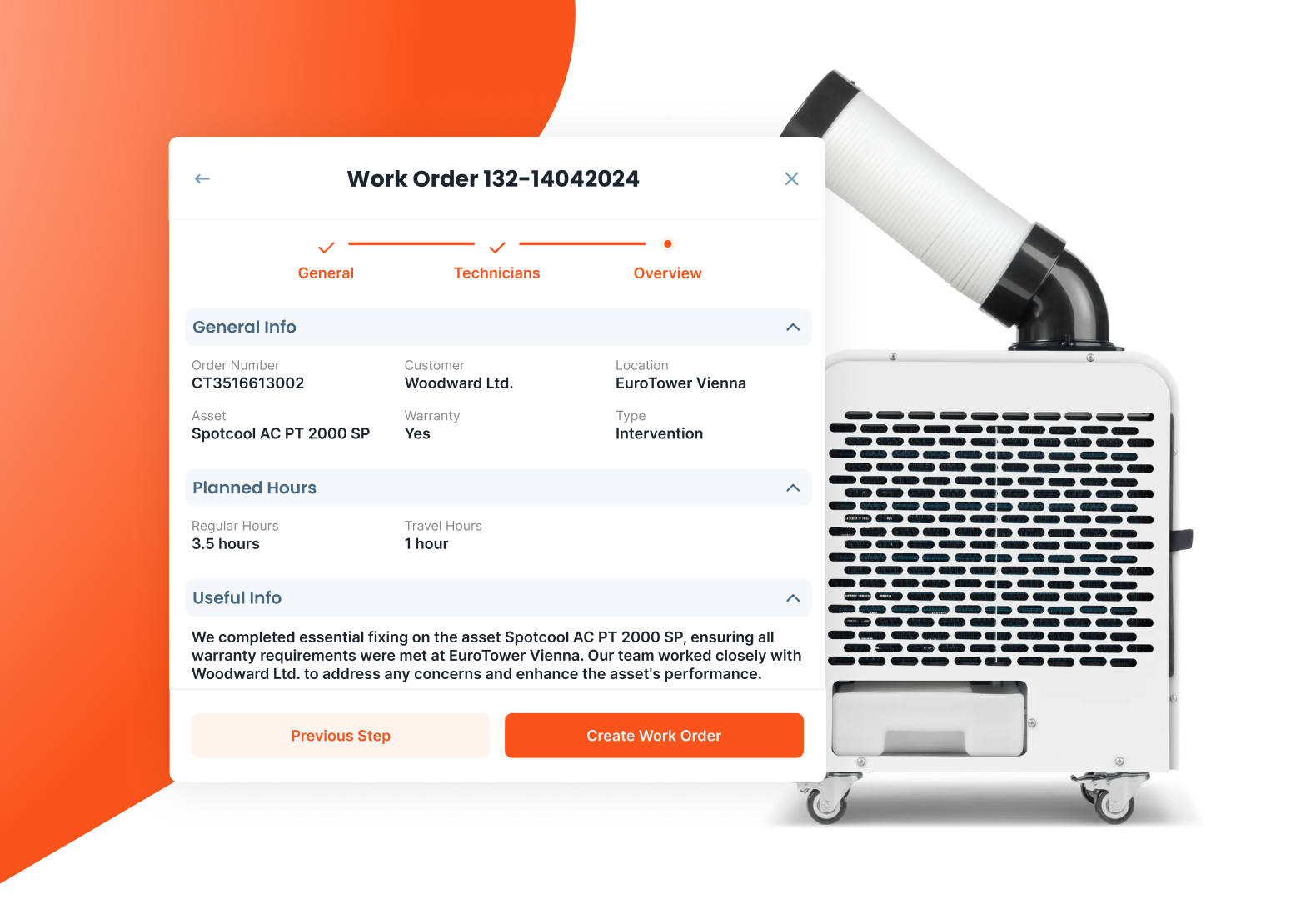
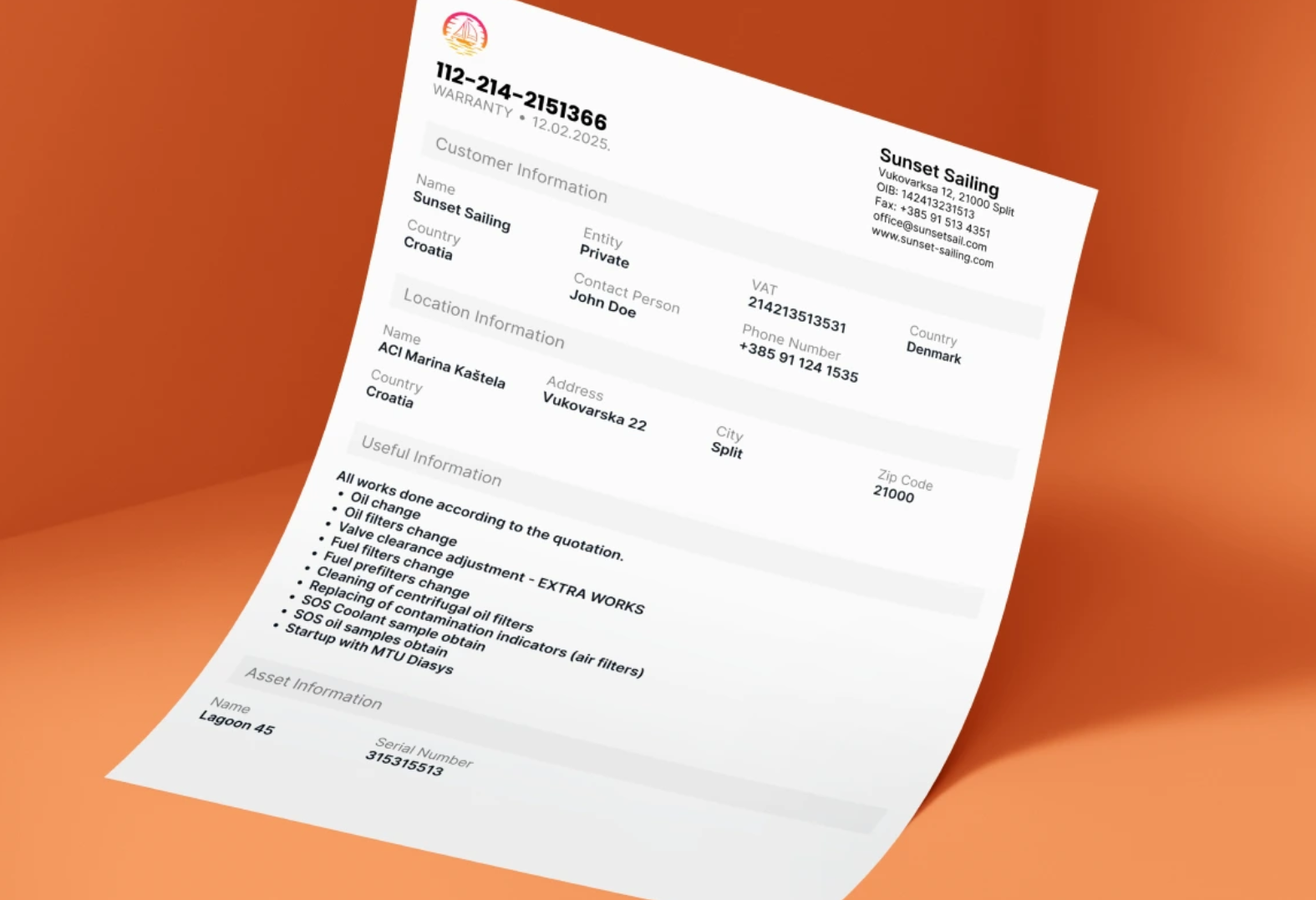
A leak check work order holds the fields Article 7 asks for and the steps the technician follows on site. Here is the example for the VRF in the office building:
| Field | Example |
|---|---|
| Job type | Leak check, Article 5 of Regulation (EU) 2024/573 |
| Customer and location | Office building, roof, VRF system 2 |
| Unit | VRF outdoor unit, serial number from the nameplate |
| Gas and charge | R410A, 12 kg, 25.05 t CO2e |
| Interval | 12 months, no leak detection |
| Parts checked | joints, valves, brazed points, heat exchangers, service ports |
| Result | no leak, or leak at the marked point |
| Added and recovered | kilograms, gas type, recycled or reclaimed |
| Technician | full name and certificate number |
| Signature | technician and customer representative |
| Next check | date from the interval, or the follow-up after a repair |
The same work order comes as an Excel template. It has drop-downs for the gas, the hermetically sealed label and leak detection, the calculation of tonnes of CO2 equivalent and the interval from steps 1 and 2, the date of the next check and the deadline for the follow-up check after a repair, and a separate equipment list that shows which unit is due for a check, when and at what interval.
Step 5: close the loop after a repair
When the technician finds a leak, the work order stays open until a new work order for the follow-up check exists, due between 24 hours and one month after the repair. The follow-up goes to the same technician or to another one with a valid certificate, and the records get two entries instead of one.
The leak check interval is a preventive maintenance schedule per unit, calculated from kilograms and GWP.
How it works in Serwizz
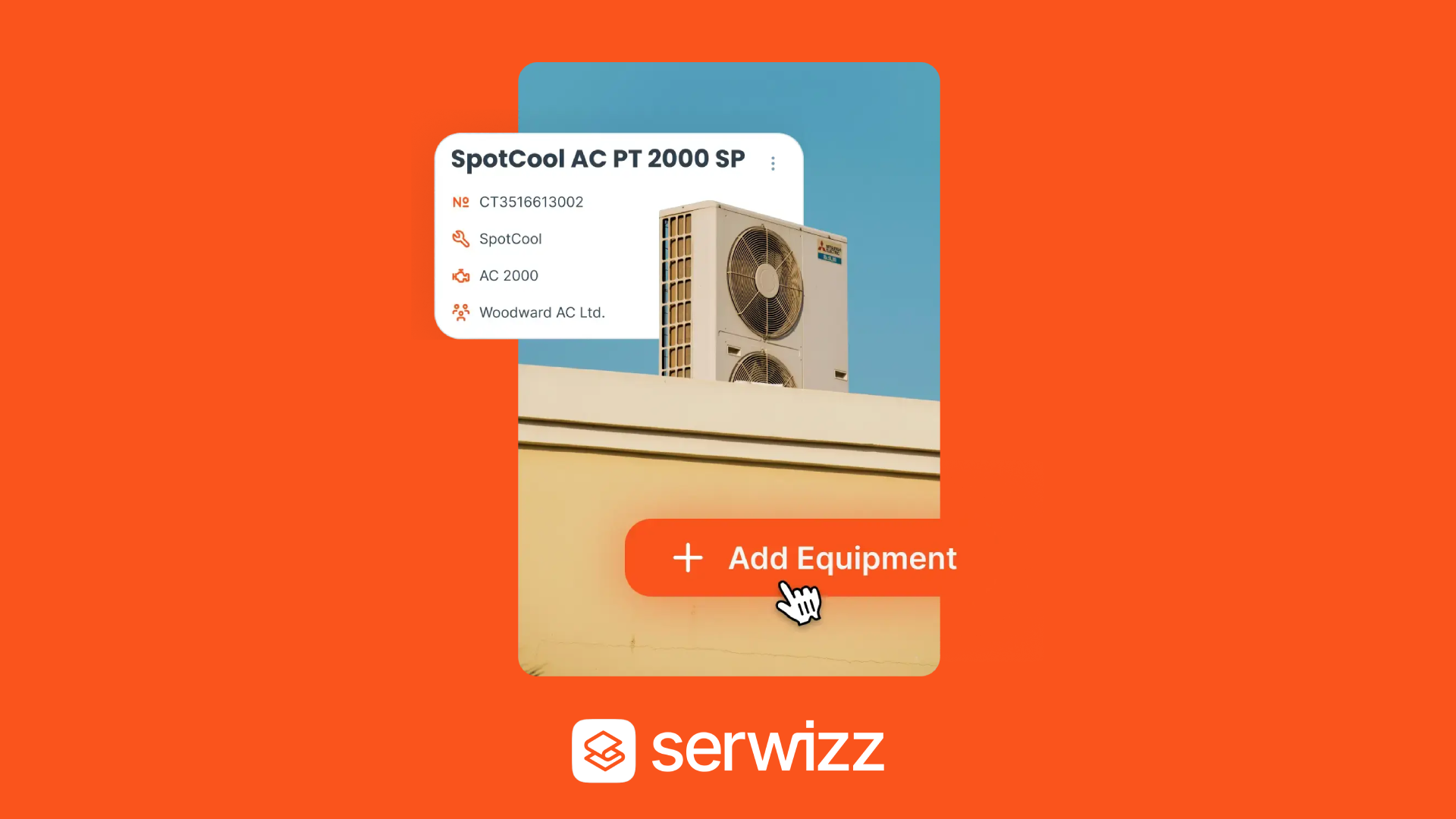
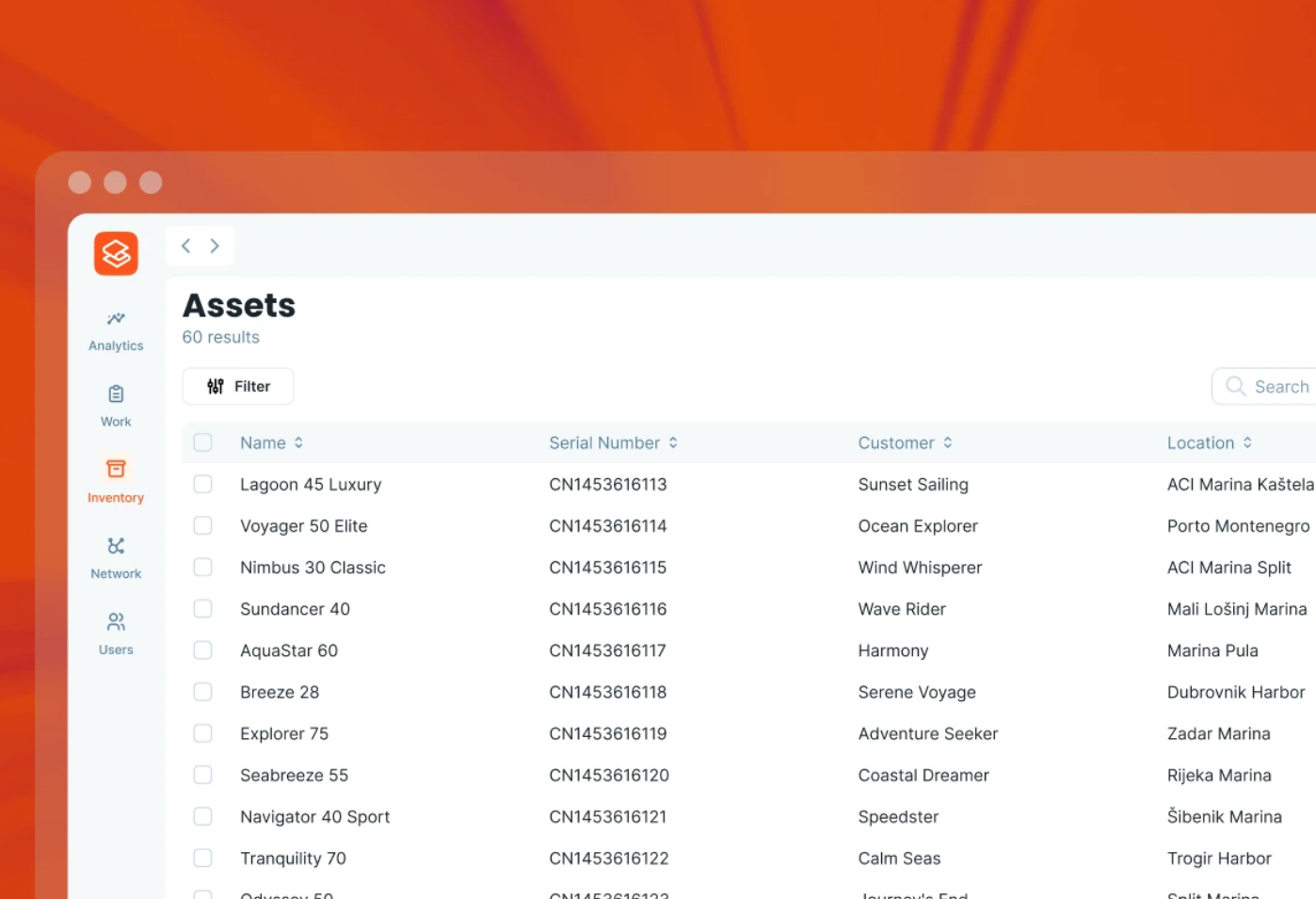
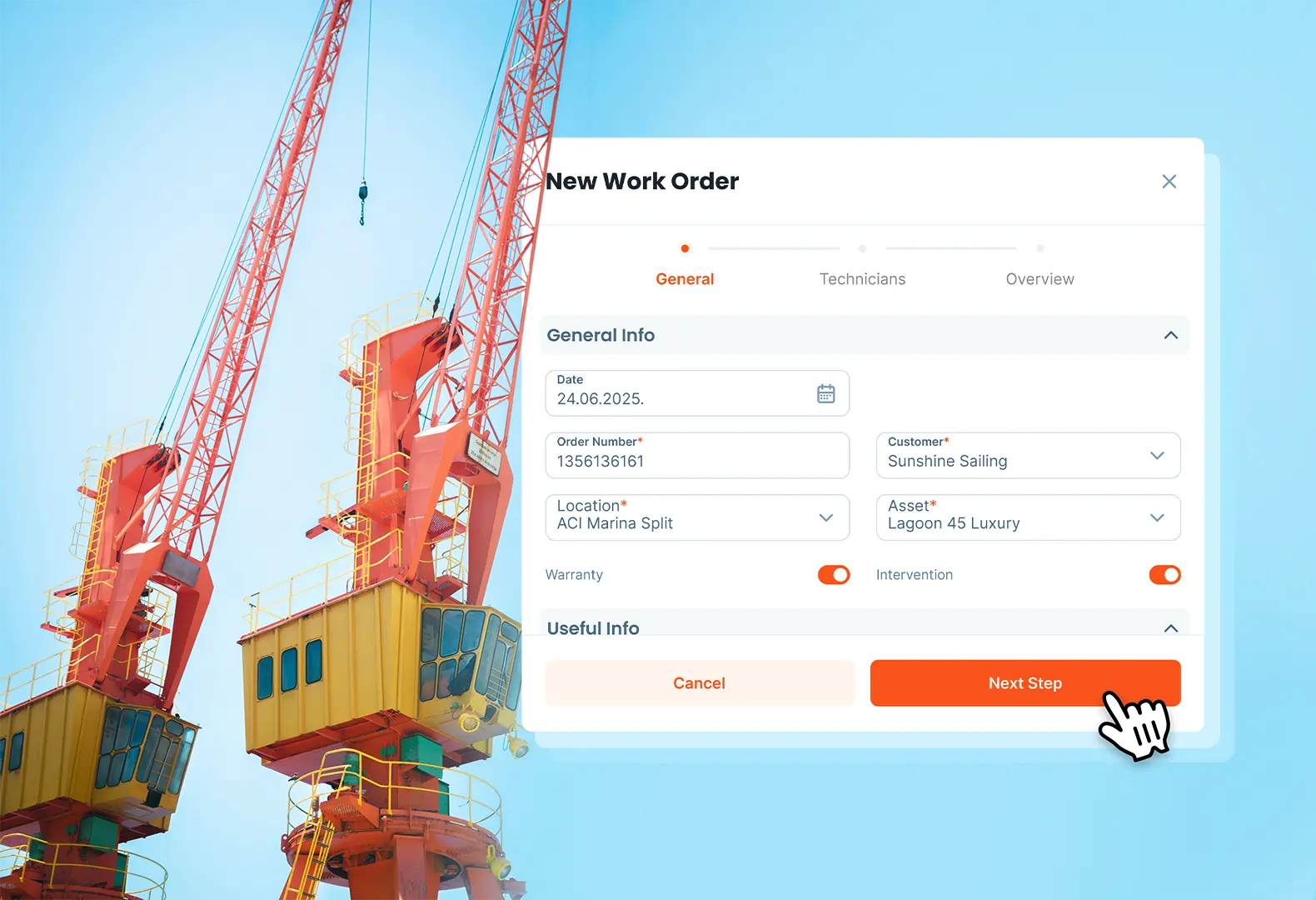
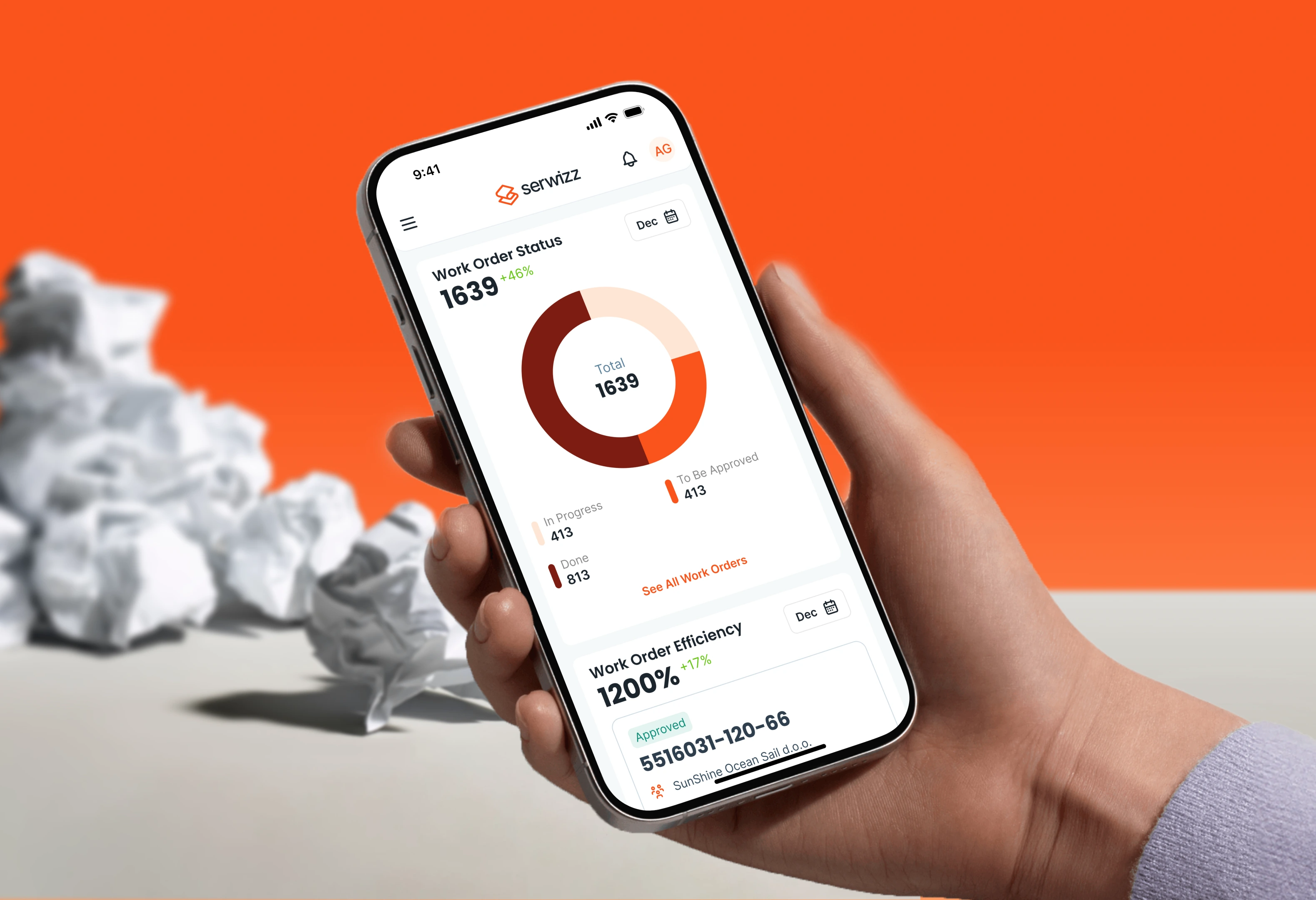
In Serwizz every unit is an asset of the customer, with a location and a room, and the gas type, charge, tonnes of CO2 equivalent and leak detection status go into the asset data. The technician sees what waits on the roof before climbing up. More on the asset management page.
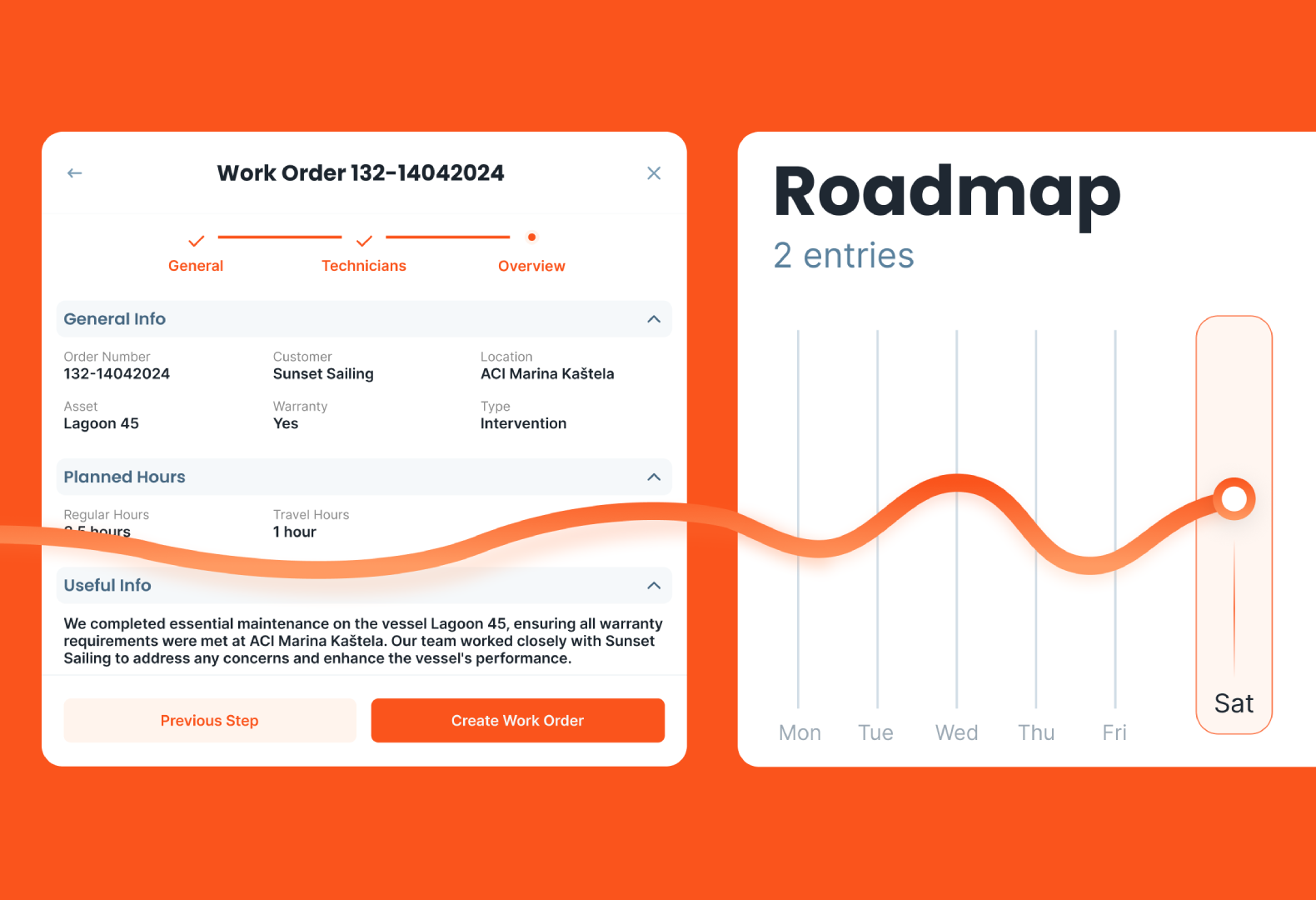
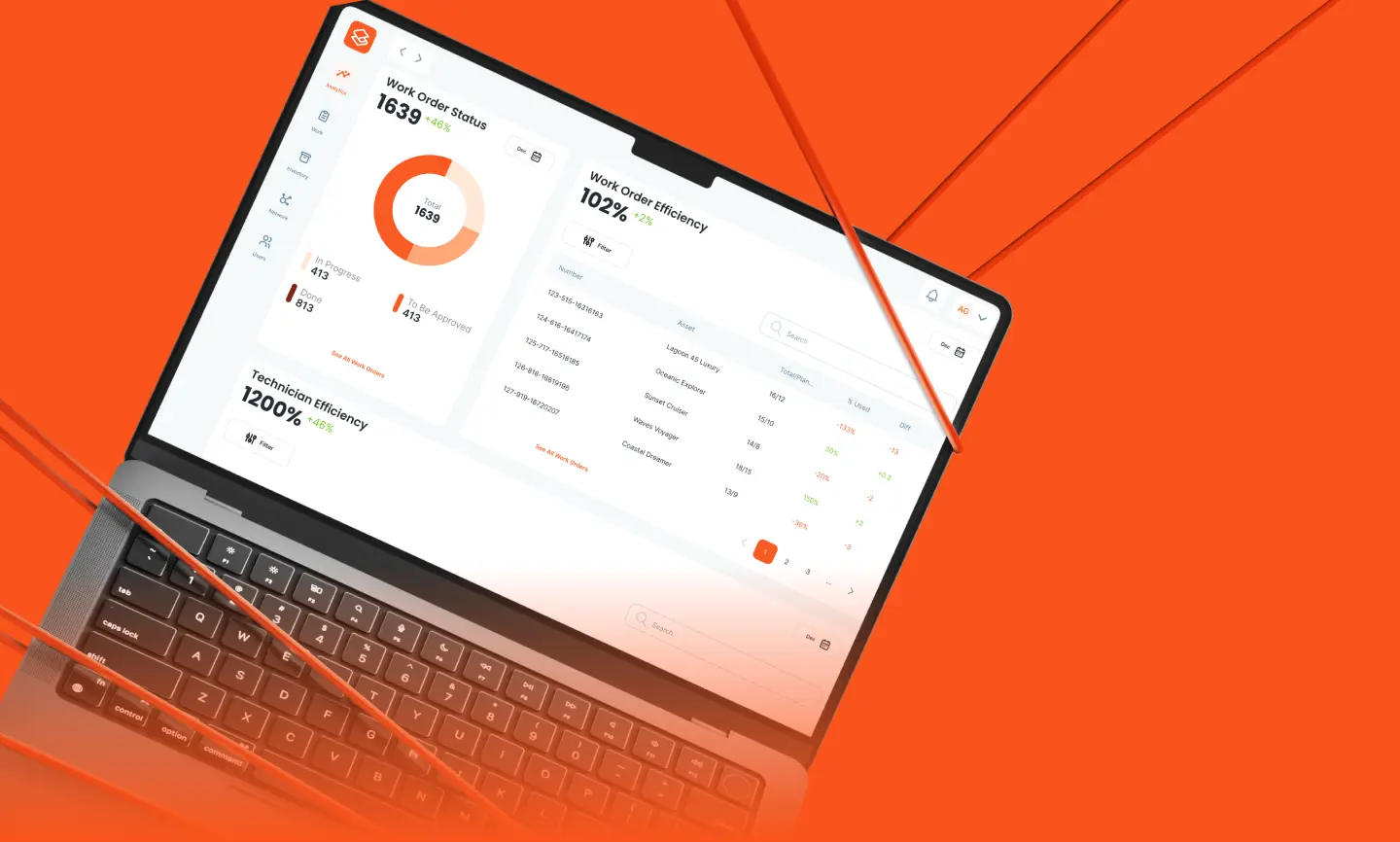
The interval from step 2 becomes a preventive maintenance plan for the unit. In the schedule you pick a repeat every 12, 6 or 3 months, and Serwizz opens a work order for each due date and assigns it to a technician. For the follow-up after a repair, the manager opens a new work order on the same unit, due within one month of the repair.
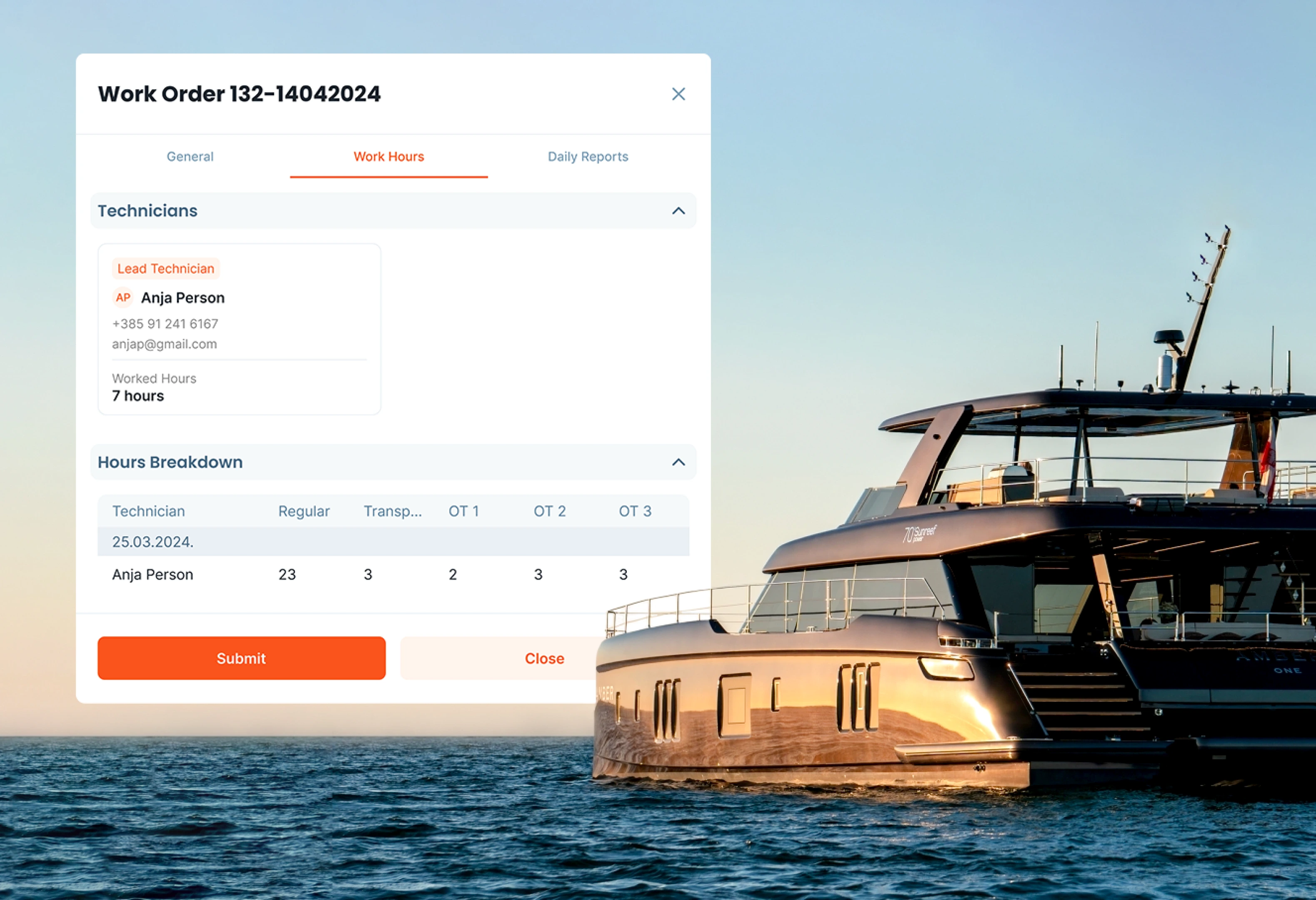
You enter the fields from step 4 once in the description of the preventive maintenance plan, so every leak check work order arrives with the same list of steps and each technician fills in the same fields in the same order. On site the technician attaches photos of the joints and enters the gas quantities, and both the technician and the customer sign the work order. The work order stays with the unit in the history of work order management, so when a customer or an inspector asks for five years of records, the data sits in one place.
Serwizz does not calculate tonnes of CO2 equivalent on its own and does not send data to the registers of the authorities. You run the calculation from step 1 once per unit and enter it on the asset card, and the reports required by national law remain the duty of the operator. Serwizz is a PWA, so technicians open it in the browser on their phone with no app store install. Read more about HVAC service on the Serwizz for HVAC page, and about routine service in why preventive maintenance matters for HVAC systems.
Every unit with refrigerant gets its own check schedule
A service company which calculates tonnes of CO2 equivalent once for every unit under contract and turns the interval into a recurring work order stops depending on a diary or a technician's memory, and five years of records build up on their own, one work order at a time. The routine stays the same when the fleet moves to new gases, because only the calculation on the asset card changes.
To see a leak check plan for your customers in Serwizz, request your Serwizz CMMS demo. Or start a free trial and add your first unit today.